
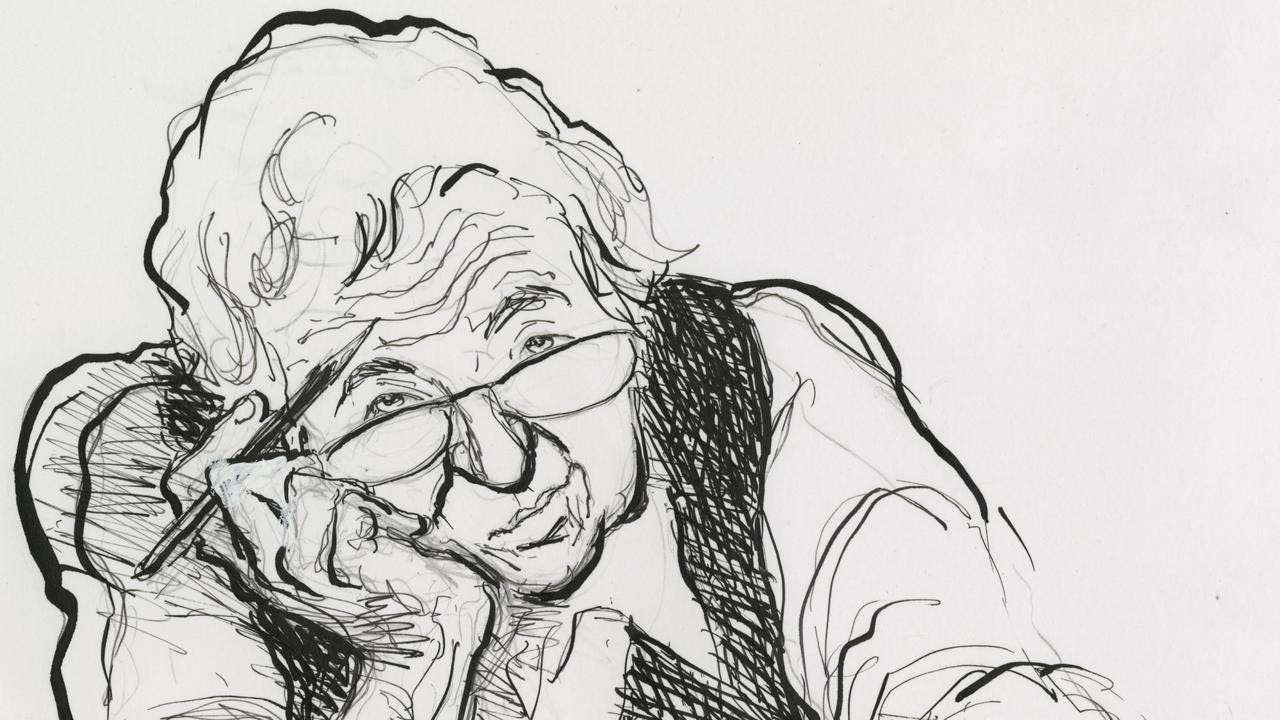
Pat Oliphant, self portrait
25 years ago Jay Evensen, my then-editor at the Deseret News in Salt Lake City, Utah, invited me to be a regular presenter on political cartooning for a journalism class he taught at Brigham Young University. Each year I would collect the previous year’s overhead projection material and make the journey from Salt Lake City to Provo — bearded and clearly out of place in open violation of that school’s Honor Code.
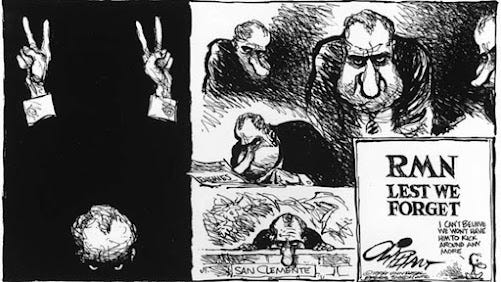
I would begin my presentation with Thomas Nast and move through rich political cartoon history, spending the last half of my time on the work of Pat Oliphant. At that time, he was still practicing his craft and so it was as easy as projecting his past and current work to demonstrate the skill and bite of his cartoon work.
“Satire is a way of holding power accountable when polite conversation fails.”
— Pat Oliphant
I was about a decade behind other newspaper cartoonists by the time I landed a job drawing for the weekly Davis County Clipper in 1990. I was eager, but untrained and naive — my opinions were as young as my recently fully-developed frontal lobe! Life had not kicked me around enough yet to really have an opinion on anything outside of the bubble I grew up in. But there I was drawing an opinion each week, stirring up the local mayor’s office enough to prompt the mayor to spend the majority of a city council meeting showing my cartoons to prove I was picking on him.
At issue was a natural gas pipeline which was being ramrodded through the City Council by Mayor Bob Linnell without any environmental impact studies. I drew a few cartoons that attempted to show the malintent of his actions. Linnell was adamant that I was unfairly portraying him as corrupt. He stormed into Gail Stahle’s office—the Clipper’s publisher—demanding that my cartoons of him be stopped.
I liked that.
I felt a little bit like Oliphant that day who once said: “Satire is a way of holding power accountable when polite conversation fails.” Even though calling out a Bountiful, Utah mayor was a tiny win for democracy compared to what cartoonists like Oliphant and Paul Conrad were doing, I still felt like I had held a little bit of power accountable.
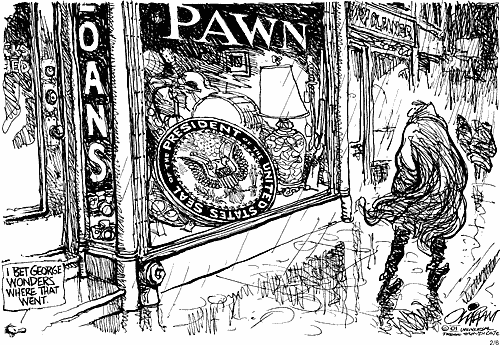
The Watergate-era journalism boom inspired a generation of politically minded artists to take up political cartooning — a career that spent more than a decade on life support before the Trump administration breathed new life into the form. Memes and AI-generated personal commentary cannot begin to compare with imagery created by those who skillfully skewer with pens dipped in India Ink.
I cannot think of a better way to honor the memory of Pat Oliphant than to keep the medium of Political Cartooning alive.
“There were dragons to slay in the old days. Nixon was a good dragon.”
— Pat Oliphant